
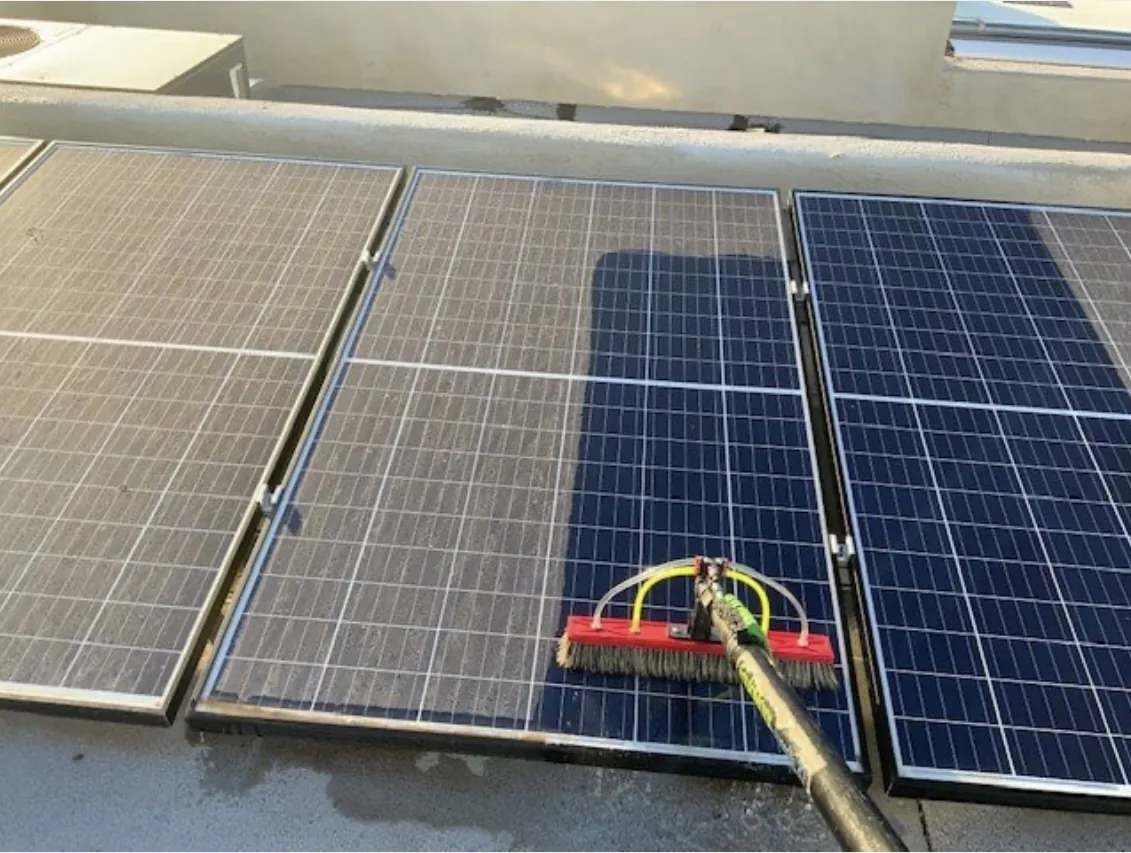
When the same mess keeps returning
Share where deposits appear and whether you have seen birds or animals returning to the array. Cleaning addresses the surface; it does not automatically remove nests, close entry points, or repair chewed wiring. If signs point to activity beneath the panels, request a separate review of the underside and perimeter protection.
Separate the cleaning and protection estimates
Twenty panels cost $300 to clean. Critter guard is priced separately at $5–$9 per linear foot of array perimeter, so panel count alone is not enough to price it. Nest cleanup, damaged equipment, and other repairs require their own agreed scope. Photos from the ground and a description of the activity help us prepare the right request.
What to monitor after the visit
Keep the service date with monitoring records and note whether deposits return. A clean surface does not prove every panel or inverter is healthy. If an alert persists or a section still produces unexpectedly little power, send those details for troubleshooting rather than repeatedly booking cleaning for an unresolved fault.
What cleaning can recover
Cleaning can address output lost to surface buildup; the benefit varies by array. Research does not establish a guaranteed savings percentage for your home.
IEA PVPS soiling research · National laboratory soiling map
Sources reviewed September 22, 2026. Dollar examples are calculations, not customer results. Photos illustrate solar cleaning and are not identified as a completed Mesquite job.