
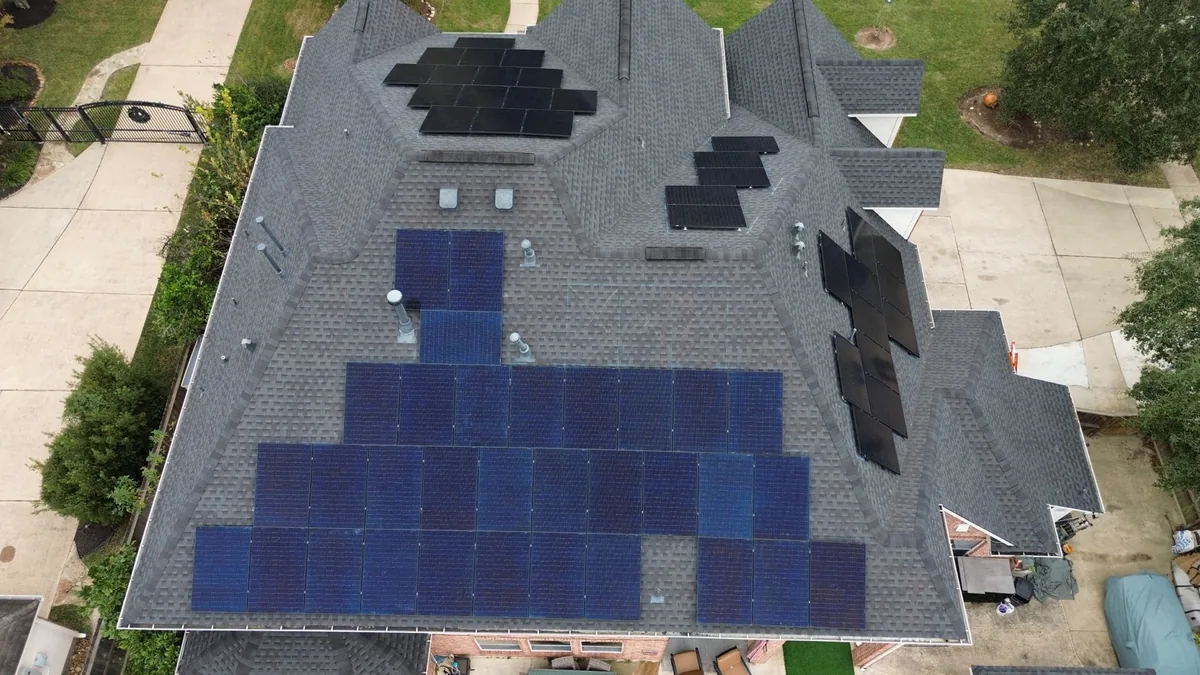
Three ways to improve an existing system
Replace damaged or failed panels. Restore the affected portion with compatible equipment. For storm-related work, start with our hail-damaged panel replacement service.
Replace an aging array. Repowering means updating panels and, where needed, the inverters, optimizers, racking, or other equipment. It can be worth comparing when several components need work or panels are already coming down for a new roof.
Add a separate array. If the existing system works well and space is available, adding capacity may preserve useful equipment. Compare both options before removing functioning panels.
What we check before proposing higher-wattage panels
Roof fit and mounting. Confirm the new module dimensions, weight, clamp zones, roof condition, layout, and required access clearances. The same number of new panels may not fit in the old footprint.
Electrical compatibility. Check each proposed panel against the inverter or optimizer’s voltage and current limits, approved combinations, string layout, and connection requirements. Wiring and other equipment may need changes.
Inverter output. An inverter can limit how much of the extra panel power becomes usable AC electricity. This is often called clipping. The annual effect needs a design-specific model; it cannot be calculated by treating the inverter’s watt rating as a constant daily energy limit.
Ownership and approvals. Check applicable permits, inspections, utility interconnection requirements, and any lease or warranty restrictions before changing equipment. Oncor customers can review its interconnection resources; other service territories have their own process.
Production and savings are different comparisons
Panel watts describe rated power under test conditions. Kilowatt-hours (kWh) describe energy generated over time. Roof direction, shade, weather, temperature, equipment losses, and downtime influence that energy. Use a full year of monitoring data when available; grid exports alone are not total solar production.
For the proposed system, use a site-specific model such as PVWatts with the planned layout and inverter assumptions. Our calculator accepts a net annual yield in kWh per installed kW; its starting value is an editable example, not a measured DFW average or a live PVWatts forecast.
Electricity used in your home offsets the variable import charges it actually avoids. Exported electricity is valued under your plan’s buyback rules. More production may increase exports instead of reducing imports, so the calculator uses separate on-site consumption shares for the old and new systems. Fixed fees and minimum bills can remain.
When keeping the existing panels may be the better choice
If your system works well, the roof is sound, and much of the extra energy would receive a low export credit, an upgrade may take a long time to recover its cost. A monitoring problem, repairable fault, or specific shading issue should be investigated before replacing an array. Start with troubleshooting when production changed suddenly.
During a necessary hail repair, compare the added price of the upgrade with the added value over a compatible repair. Comparing a new system only against a damaged, barely producing system can overstate the benefit of higher-wattage panels. Use a repaired-system baseline for that decision.
What belongs in an upgrade quote?
Ask for the proposed module count and model, total DC capacity, inverter or optimizer scope, layout, expected production assumptions, removal and disposal, mounting changes, permits, inspections, and commissioning. Confirm the warranty for the new work and any effects on the existing equipment.
We quote upgrades individually. No equipment price, tax credit, insurance contribution, financing rate, or production guarantee is assumed in the calculator. If you already have a written cost, add it to see a simple payback estimate.
Want backup during an outage? More panel watts alone do not establish outage operation. Review battery installation and backup design separately.