
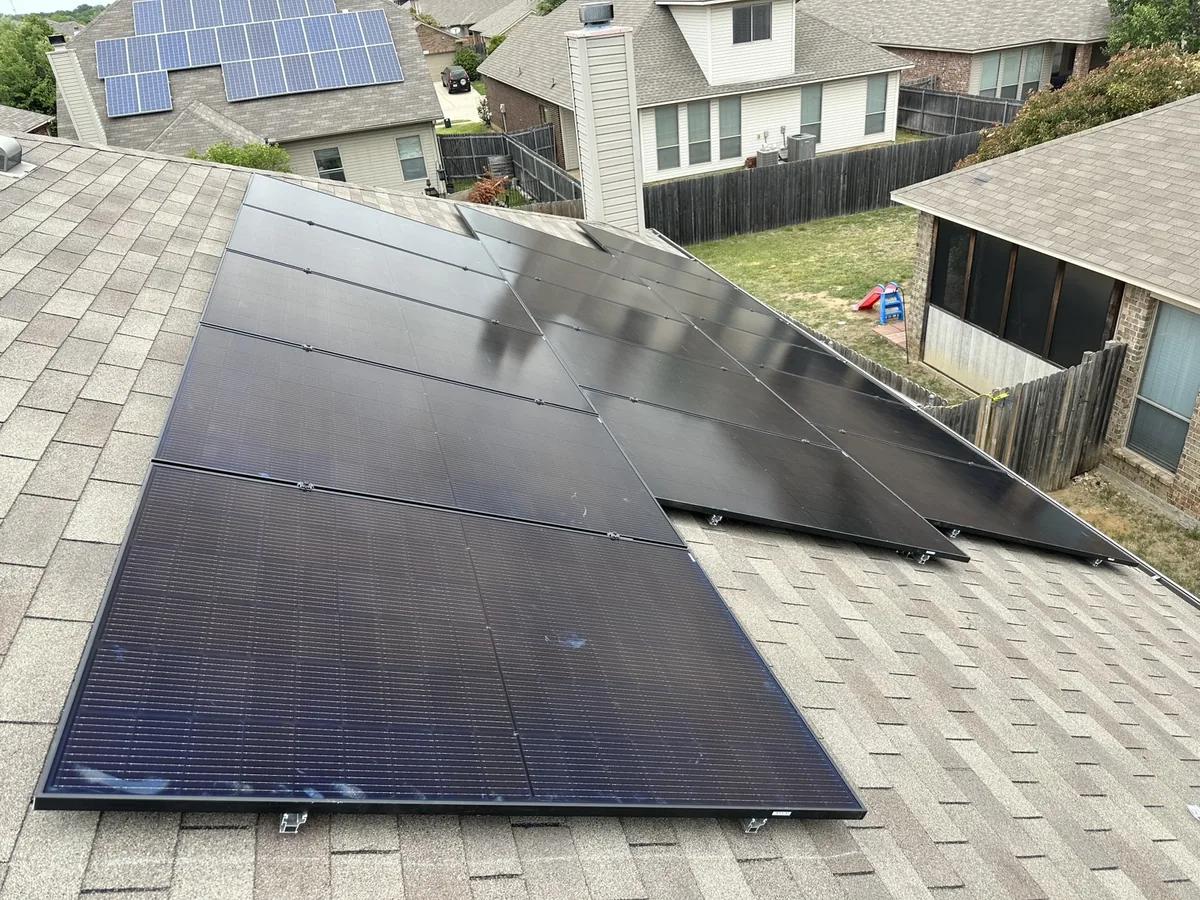
What should you do after hail hits your panels?
Stay off the roof and avoid broken glass, loose equipment, and exposed wiring. Do not open equipment or unplug panel connectors. If there is smoke, arcing, or a fire, keep clear and call 911. For visible damage, contact a qualified solar professional for safe shutdown and inspection guidance before operation resumes; a switch position alone does not make sunlit panels safe to handle.
From a safe location, record the storm date, photograph what is visible, and save monitoring screenshots from before and after the event. A hail inspection helps distinguish damage from monitoring issues or other faults.
A panel can have damage even when its glass looks intact
The U.S. Department of Energy explains that hail can crack solar cells without breaking the front glass. A normal-looking app total or a ground-level photo cannot rule out hidden damage. A professional may recommend electrical checks and specialized imaging when the initial findings justify it; confirm which tests are included or need a specialist.
A sudden drop is also not proof that every panel is damaged. Review the affected equipment and compare production under similar conditions. Our post-storm production guide explains other concerns worth documenting.
Can we replace just one panel—or a discontinued model?
A single-panel replacement may be possible when the rest of the array is serviceable and a suitable module is available. Matching only the watt number is not enough: dimensions, mounting zones, voltage, current, connectors, and inverter or optimizer compatibility all matter.
If the original model is discontinued, we review a compatible substitute and the effect on the rest of the array. Some projects need a revised string, matched electronics, a separate array, or a broader replacement. We explain the options before ordering equipment. A newer 400-watt panel is not automatically a direct replacement for a 200-watt panel.
How the replacement project works
1. Review the damage and records. Share panel and inverter models if available, approximate panel count, monitoring changes, ownership information, and the roofer’s findings. We agree on any on-site assessment needed.
2. Confirm equipment and price. The written proposal identifies the replacement module, quantity, related electrical or mounting work, testing, and any approval requirements. We discuss whether a targeted repair or system upgrade is appropriate.
3. Coordinate removal and the roof. If roofing is needed, plan the solar removal and reinstallation around the roofer’s schedule. Confirm handling, storage, access, and when the roof is ready.
4. Replace and check. Complete the agreed work and system checks. Confirm monitoring, equipment records, applicable inspections, and warranty terms in the handover. Ask how damaged equipment will be handled after any insurance documentation is complete.
What does hail-damaged panel replacement cost?
Replacement is quoted for your equipment and scope. Panel availability, quantity, roof access, mounting changes, compatible electronics, testing, and required approvals affect the total. There is no published flat replacement-panel rate.
Our $160–$220 per-panel guide is for removal and reinstallation of existing equipment. It does not include buying a replacement panel or upgrading an inverter. If an on-site diagnostic visit is needed, the $200 nonrefundable service deposit is credited toward approved repairs and retained if repairs are declined; confirm the scope before booking.
Insurance documentation and optional upgrades
Ask your insurer how your specific policy treats solar equipment, the deductible, documentation, and replacement scope. Keep photos and service records, and follow the insurer’s instructions before disposing of damaged equipment. The Texas Department of Insurance storm guide gives useful documentation tips.
We provide the agreed solar work and supporting scope; the insurer decides coverage. A higher-wattage upgrade may have an out-of-pocket cost beyond a covered repair. Request separate repair and optional-upgrade prices so you can compare them clearly. If the system is leased or under a power purchase agreement, contact its owner before authorizing changes.