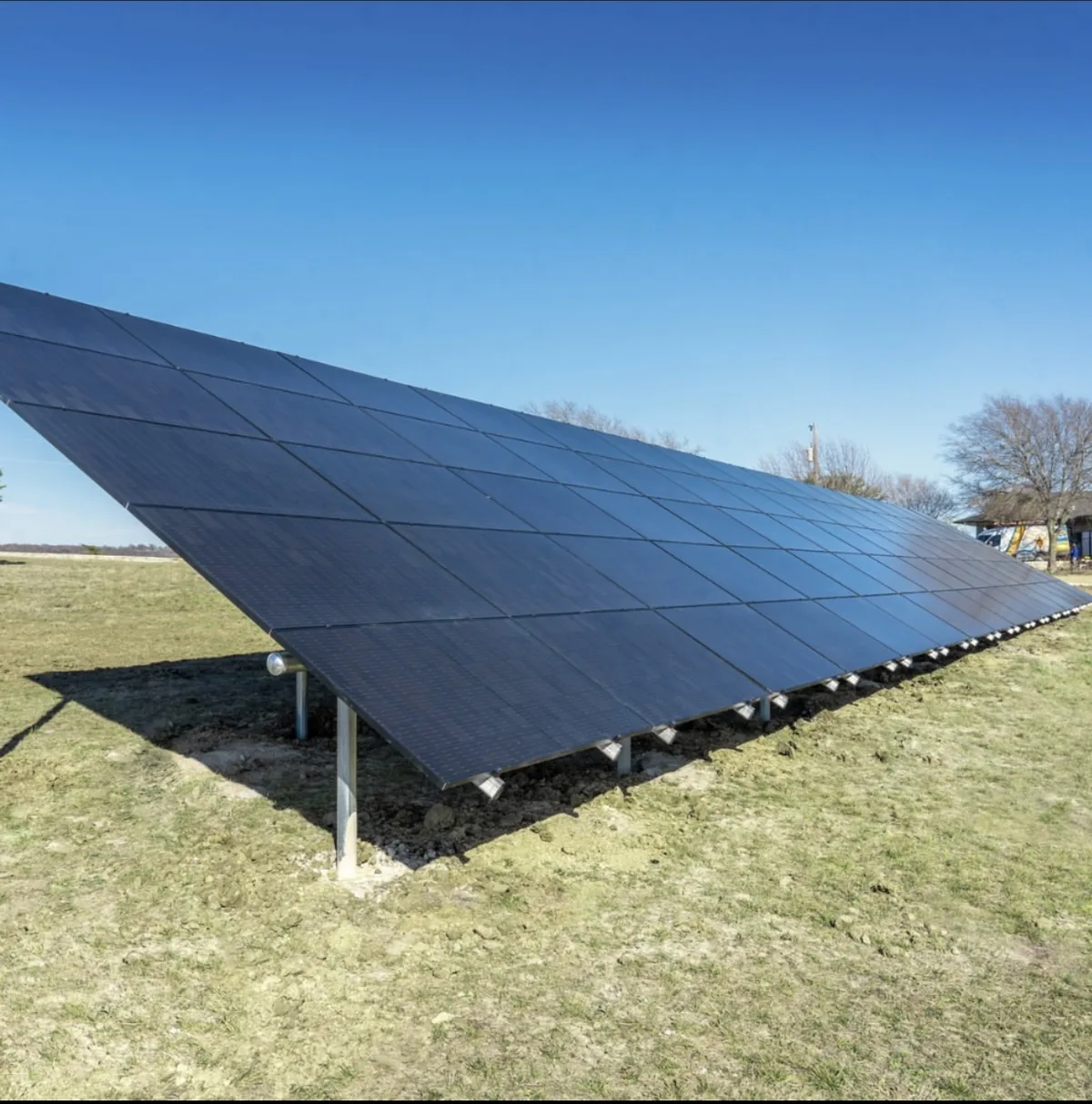
Ground-mount concerns worth investigating
Tell us whether the change affected the whole system, one section, or only the monitoring display. Include when it began and any recent storms, mowing, landscaping, construction, animal activity, or electrical work near the array.
Ground-level access does not make solar wiring safe to touch. Keep people, pets, and livestock away from damaged equipment while the service plan is reviewed.
| What changed | What the service review should consider |
|---|---|
| Production declined gradually | Seasonal conditions, new shade, surface buildup, monitoring history, and equipment condition |
| Output stopped suddenly | Faults, current operating information, recent site work, and the connection to the inverter |
| Cracked panels or loose-looking equipment | Safe access, the extent of visible damage, replacement compatibility, and structural concerns |
| Vegetation or standing water near equipment | Shading, access, drainage concerns, and whether another site professional is needed |
| Exposed or damaged cable protection | The affected area, safe isolation, and the separate electrical repair scope |
What we can review for your existing array
Sun Ray Solutions reviews ground-mount requests for solar troubleshooting, replacement panels or electronics, monitoring issues, cleaning, and planned system changes. We confirm the equipment, access, and work we can accept for your property before scheduling.
A service visit starts with the stated concern and available records. The written scope identifies the checks, access arrangements, and what requires separate approval. Buried cable work, excavation, structural repairs, grading, vegetation removal, and engineering are not assumed to be included.
If posts or foundations appear to have moved, the issue may require a structural or site specialist. If equipment has been flooded or visibly damaged, do not attempt to restart it or work around it until a qualified professional has assessed the conditions.
A maintenance plan that fits the property
The U.S. Department of Energy’s solar operations and maintenance resources emphasize planned upkeep and performance review. For a residential ground-mounted system, a useful starting point is a record of normal production, equipment information, and site changes.
Keep access routes available and arrange appropriate vegetation care so growth does not shade the array or obstruct service. Landscaping equipment should not strike modules, supports, conduits, or cables. Confirm safe clearance and maintenance methods for the actual installation with the professionals doing that work.
Cleaning should be based on the surface condition and manufacturer guidance, not an automatic promise of a fixed production gain. See our panel cleaning service and cleaning cost and value calculator. A sudden fault needs diagnosis rather than an assumption that washing will fix it.
Repair, replace, or expand the array?
A confirmed fault may call for a compatible panel, inverter, optimizer, microinverter, or other defined repair. We review the model, system arrangement, and findings before recommending replacement. Older equipment availability can affect the options and scheduling.
If you want more output, existing land alone does not establish that the system can expand. Inverter limits, electrical routing, usable space, mounting, shading, and applicable approvals still need review. Compare an array addition with higher-wattage panel replacement using a design-specific proposal.
For a new ground-mounted system, use our installation planning page. This repair page is focused on equipment already in place.
What to send for acreage and rural properties
Send your city or ZIP code, approximate panel count, inverter model, and photos taken from a safe distance. A wide photo showing the array and its surroundings is useful alongside a close photo of an accessible equipment label.
Describe the route from the entrance to the array, gates or livestock, parking, soft ground, standing water, and the approximate distance between the panels and inverter. Share an existing site plan if you have one; do not dig or uncover wiring to investigate.
We serve Dallas–Fort Worth and communities up to approximately two hours beyond DFW, including requests around Waxahachie, Midlothian, and other surrounding communities. Send the exact location to confirm availability. These are service areas, not separate Sun Ray offices.
Ground-mount repair pricing
The $200 nonrefundable diagnostic and maintenance deposit covers the on-site visit and initial assessment. It applies toward approved repairs and is retained if repairs are declined. Equipment, additional testing, electrical repairs, and site work are separately identified when needed. No travel fee.
Accessible panels can simplify some tasks, but the total still depends on the fault, equipment, system layout, and agreed work. We quote the actual scope rather than assuming every ground-mounted repair is cheaper than a rooftop repair.
Sources behind this guidance
- U.S. DOE: solar operations and maintenance resources
- U.S. DOE: assessing and reducing hail damage
- PVWatts: site-specific production estimates
Reviewed September 27, 2026. Current manufacturer terms and the agreed scope apply to the actual equipment and project.