
What the research actually says
IEA PVPS estimates global annual soiling losses at 3–5% and emphasizes that losses vary greatly. That is not a Dallas rooftop forecast or the gain from one cleaning. Read the research summary.
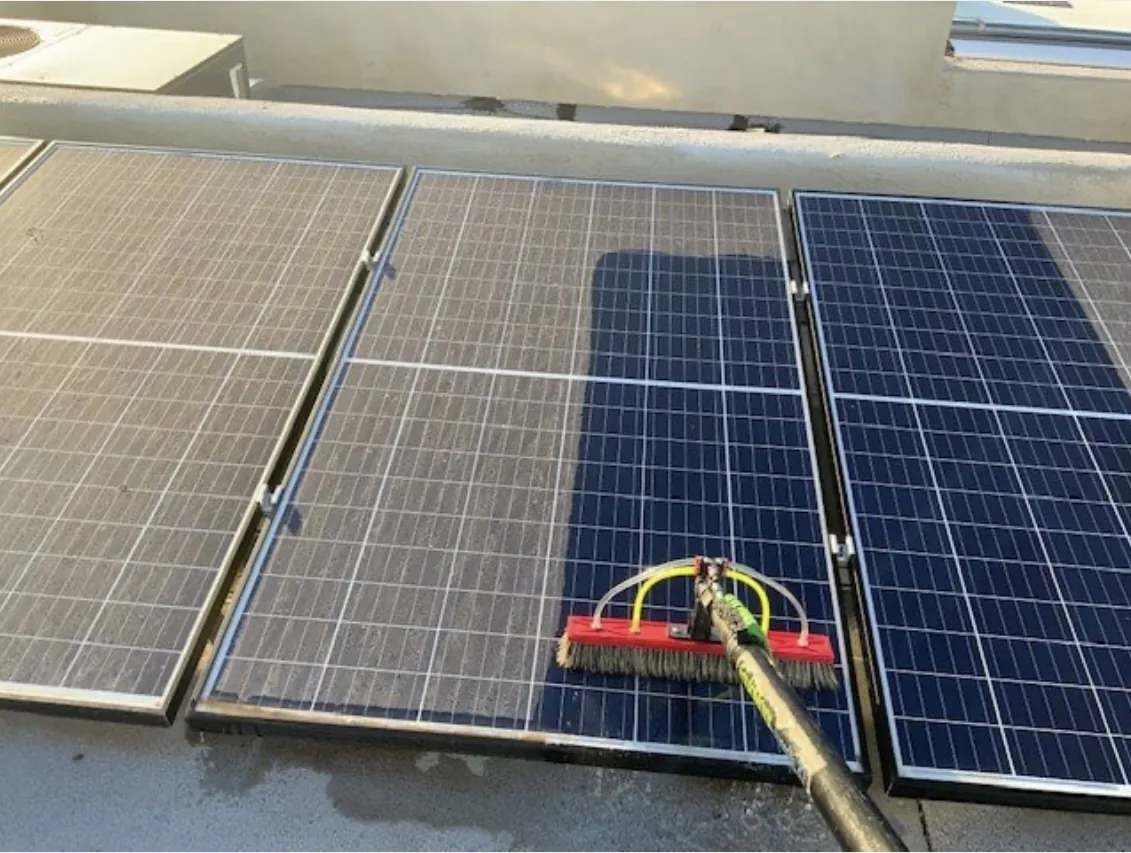
A photo can show buildup, but it cannot establish a percentage loss. Use the national laboratory’s soiling map as context, not a measurement of your roof.
When cleaning has a stronger case
Start with visible contamination and production records. A localized deposit, ongoing dust source, or buildup that remains after rain gives us a specific issue to review. If the array looks clean and its performance is normal, compare the cost carefully before booking a recurring service.
For a DFW home near construction, include when the nearby work started and whether it has ended. For recurring bird activity, consider a separate critter guard assessment instead of repeatedly addressing only the surface.
What recovered power is worth
Electricity used in your home can avoid variable import charges. Exported electricity is worth the marginal credit your plan actually pays, which may be lower or zero. Fixed monthly fees generally do not disappear when panels make more power.
| Assumption over the next 3 months | Recovered electricity value | After cleaning cost |
|---|---|---|
| 3,000 clean-system kWh × 2% recovered × $0.12/kWh | $7.20 | −$292.80 |
| 3,000 clean-system kWh × 5% recovered × $0.12/kWh | $18.00 | −$282.00 |
| 3,000 clean-system kWh × 10% recovered × $0.12/kWh | $36.00 | −$264.00 |
The percentages are scenarios, not measured DFW losses. The $0.12 blended value assumes 70% used at home at $0.15/kWh and 30% exported at $0.05/kWh. Cleaning may still address a visible maintenance concern, but this example does not pay for itself from electricity alone.
Calculate with my own numbersDo not turn a one-day gain into annual savings
Ask: how long would the buildup have remained without cleaning? A short-term output improvement is not automatically a year of extra power. The comparison must allow for rain and new dirt. Our calculator asks for an average recovered output over your selected period, not just the initial gain.
Do not compare a cloudy day before service with a sunny day afterward and call the entire difference a cleaning benefit. Match weather, season, equipment availability, and shading as closely as possible. Keep the uncertainty visible when you cannot make a controlled comparison.
Cleaning or troubleshooting?
A sudden shutdown, inverter warning, or several non-producing panels needs a diagnostic review. Cleaning is not a repair for failed electronics. Share the monitoring alert and when it started before choosing the service.