
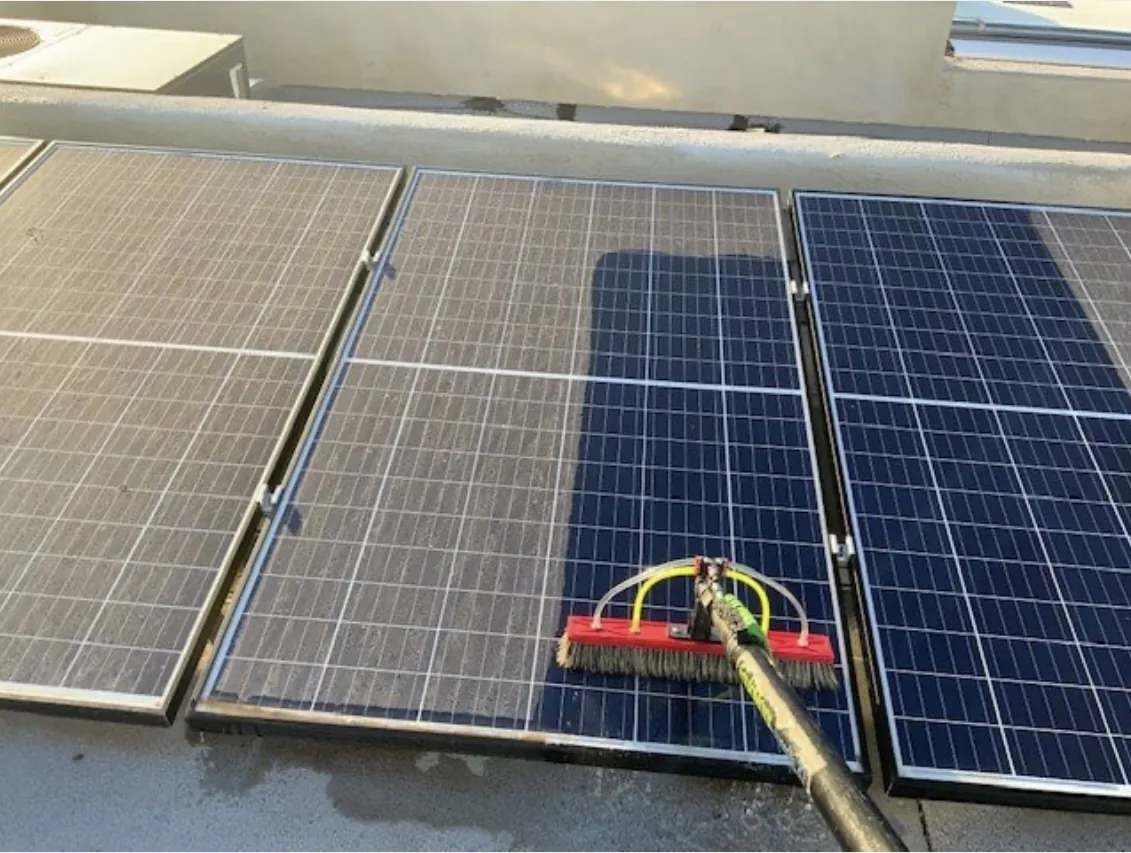
Plan around the condition, not a calendar subscription
The NREL-led O&M guide recommends a site-specific cost-benefit review for uniform soiling; heavy rain and new buildup change the value of a cleaning. See section 5.7.1.
| What you notice | Useful next step |
|---|---|
| Pollen or seasonal surface film | Check whether it remains after rain; review production before booking. |
| Nearby construction or landscape work | Share the dust source and expected completion date. |
| Recurring bird droppings or nesting signs | Discuss cleaning and an inspection for perimeter protection. |
| No obvious buildup and normal output | Continue monitoring; calculate whether a paid visit is worthwhile. |
| Sudden production drop or equipment warning | Request troubleshooting rather than assume dirt is the cause. |
Keep a simple record of your array
Save a monthly generation screenshot, note unusual outages, and photograph the roof only from a safe location on the ground. After heavy dust or repeated bird activity, compare those records with the current condition. This gives your service request more context than a guess about the last cleaning date.
Use the same time window in your monitoring app. Different day lengths and weather can make two months look very different even if the panels are equally clean.
Choose a method that fits your equipment
Follow the module manufacturer’s cleaning instructions. The O&M guide cautions against high-pressure water, abrasives, and harsh chemicals; uneven soiling can also create localized hot spots. Read the cleaning guidance.
Leave roof access, exposed wiring, and panel removal to qualified professionals. Tell us about cracked glass, error messages, or access restrictions before a cleaning is scheduled. See our hard-water stain guide if marks remain on the glass.
Price the visit before deciding on frequency
One 20-panel cleaning costs $300 at our published rate. Two visits cost $600. That arithmetic does not establish that two visits are needed or that they recover twice as much energy. Evaluate each visit against the conditions at that time.
Compare the cost and estimated value