
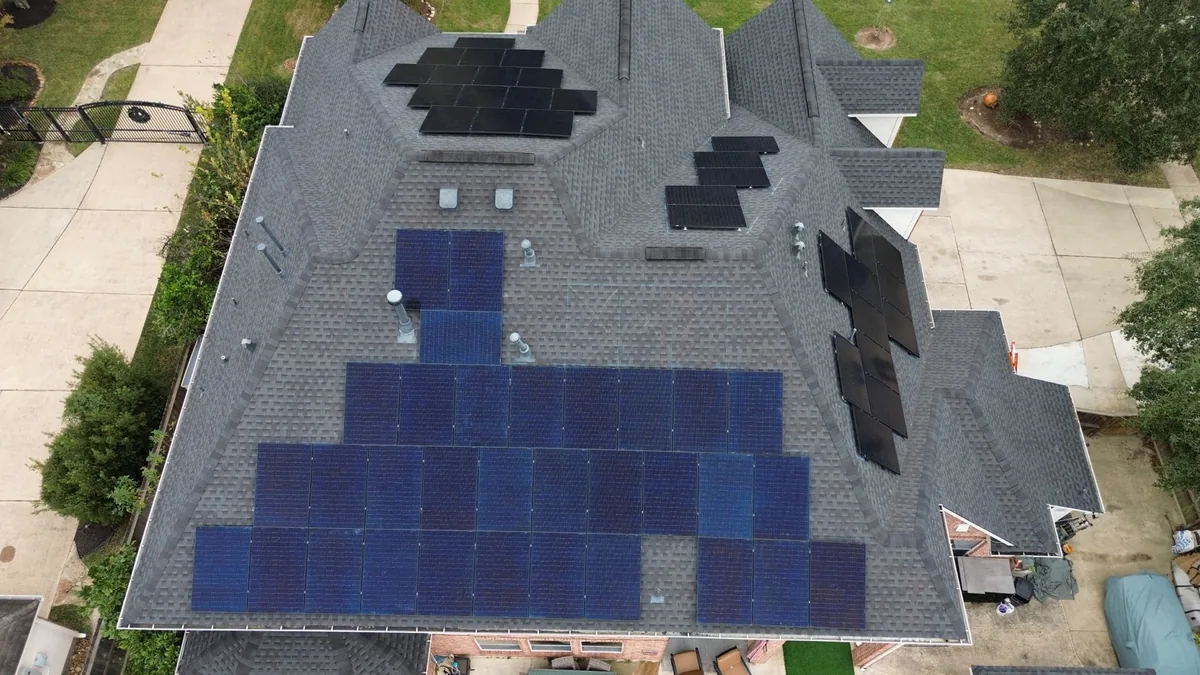
Start with the roofer’s work area
Ask your roofer to identify the area they need to expose, including room for access and materials. A ground photo or existing roof drawing with the affected area marked is more useful than a panel count alone. Do not climb the roof to create a photo.
Send the roofer’s proposed scope and contact with your request. A repair beside an array, a flashing replacement, and a larger roof-section replacement can need different access. The removal boundary should be agreed before crews arrive.
Separate roofing access from solar operation
Explain whether you expect the rest of the system to remain available during the work. We must review that possibility for the actual equipment and arrangement; partial physical removal does not guarantee uninterrupted production from the remaining panels.
Include any known alerts or low-production concerns before removal. If troubleshooting is needed, identify it as an additional scope so an existing problem is not confused with the effect of the roof project.
What the partial-removal quote should cover
Partial projects receive a scope-specific quote. The full-array planning range of $160–$220 per panel should not be multiplied by a guessed number of panels and treated as a confirmed partial-removal price.
| Project detail | Why it belongs in the quote |
|---|---|
| Affected roof section | Defines which panels and associated equipment are involved. |
| Working access | Accounts for space needed by both crews. |
| Temporary condition | Explains equipment custody and the agreed status during roof work. |
| Return visit | Defines reinstallation, any replacement materials, and completion checks. |
Help us assess your project
If the roofer later expands the repair area, tell us before the return visit. A change in access, layout, or materials may require an updated scope. There is no travel fee; appointment availability is confirmed for the property.
- Property address and the affected roof face.
- Roofer’s description of the repair and proposed date.
- Panel count for the whole system and affected section, if known.
- Safe photos or an existing layout drawing.
- Whether panels should return to the same position.