If nearby work is leaving dust on your panels
Describe the source you can actually observe: roofing, construction, grading, or landscape work. Include when it started and whether it has finished. These are property-specific possibilities, not a claim that all Red Oak arrays face the same conditions. Booking a visit while an ongoing source keeps depositing material may mean the panels need attention again sooner.
Should you wait until the work ends?
If the concern is a light surface film, discuss the remaining work schedule and panel condition before choosing a date. For a heavy or localized deposit, send photos for review instead of assuming it should stay until every nearby project finishes. Do not use a neighborhood construction timeline as proof of a particular production loss.
Use a realistic savings period
Count only the period in which cleaning is expected to make a difference compared with leaving the array alone. New buildup and rain can change that comparison. A $450 cleaning for 30 panels is a known service cost; recovered electricity is an estimate. The calculator lets you change the assumed recovery and time period to see whether your expectations justify that cost.
What cleaning can recover
Cleaning can address output lost to surface buildup; the benefit varies by array. Research does not establish a guaranteed savings percentage for your home.
IEA PVPS soiling research · National laboratory soiling map
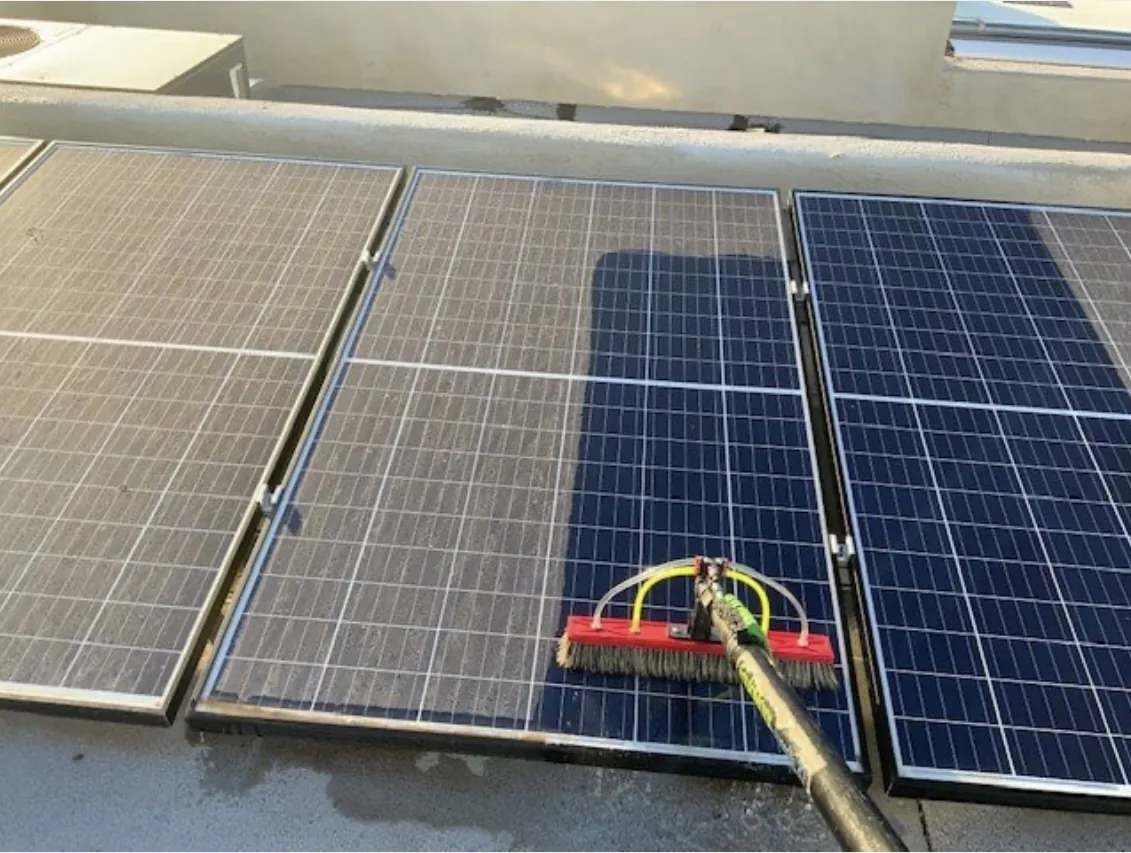
Sources reviewed September 22, 2026. Dollar examples are calculations, not customer results. Photos illustrate solar cleaning and are not identified as a completed Red Oak job.